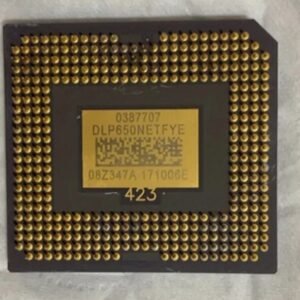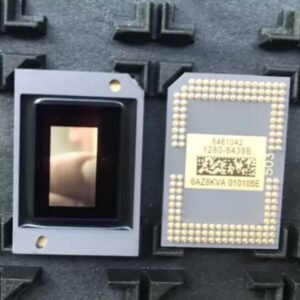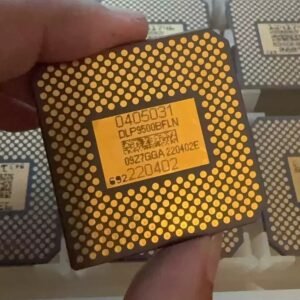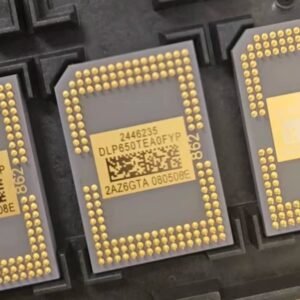
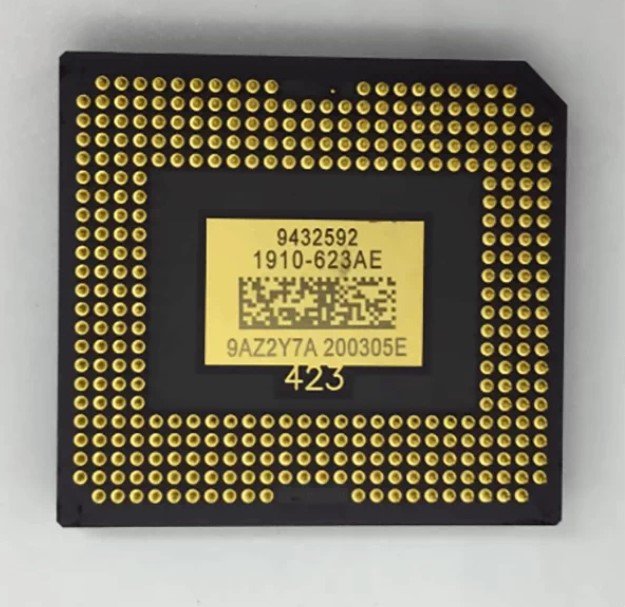
Genuine Texas Instruments 1910-623AE DMD Chip – 1080p for DLP Projectors
The Texas Instruments 1910-623AE is a brand new, genuine Digital Micromirror Device (DMD) chip from the DLP650NE series. This 0.65-inch 1080p DLP chip is the core imaging component found in many home theater, professional installation, and interactive display projectors. When the DMD fails, the first sign is usually a few white dots that slowly multiply until the image looks like falling snow or a starry sky. Swapping in this original TI chip completely restores a clean, dot‑free 1080p picture.
| Model / Part Number | 1910-623AE |
|---|---|
| Manufacturer | Texas Instruments |
| Applications | Home theater, digital signage, interactive displays, low‑latency gaming, portable smart displays |
| Order Note | Verify your original DMD part number and package type (pin‑based) before ordering. |
Known Applications & Compatible Projectors
The 1910‑623AE and its compatible DLP650NE series chips are widely used in projectors from major brands, including but not limited to:
- BenQ HT215ST – Many 1080p home theater models in this lineup use 0.65‑inch DMD chips from the DLP650NE family.
Why Your Projector’s DMD Fails – And How to Verify You Need This Chip
Each DMD chip contains over two million microscopic mirrors, each representing a single pixel. Over time, heat, dust accumulation, and normal wear can cause individual mirror hinges to fail, permanently locking a pixel in the “on” (white dot) or “off” (black dot) position. This is the classic “starry night” or “snow” effect. Once the process starts, it is degenerative – more mirrors will eventually fail. Replacing the DMD with this 1910‑623AE chip is the only way to resolve severe pixelation and restore a perfect picture.
Common symptoms of a failing DMD include:
- White dots that multiply over time – Starts with a few scattered white pixels, gradually increasing into a “snow” effect across the image.
- Stuck or dead pixels – Individual pixels remain permanently bright or dark.
Restore Your Projector – Not the Whole Machine
Replacing a failed DMD chip is an advanced repair requiring professional desoldering/soldering equipment and experience with through‑hole CPGA components. However, for a qualified technician, swapping this single component can bring a dead or white‑dot‑ridden projector back to full working order at a fraction of the cost of replacing the entire optical engine. Do not scrap a perfectly good light engine, lamp, and color wheel – just change the one part that wears out.
Before ordering, you must visually confirm and match the part number on your original DMD chip. If you are 100% certain your chip says 1910‑623AE on it, this is the correct replacement. If you are unsure, please remove your faulty DMD and send us a clear, well‑lit photo of its top surface. We will confirm compatibility for you personally.
Note: We are not responsible for damage caused by improper installation. If you are not an experienced electronics technician, please consult a qualified projector repair specialist.